Everything You Need to Know About Grana!
Think Parmesan is just «that cheese you sprinkle on pasta»? You’re missing out on one of Italy’s greatest culinary treasures! Let’s dive deep into the world of Grana – the granular, aged masterpiece that’s been perfecting Italian dishes for over 900 years!
What Exactly IS Grana? 🤔
Grana literally means «grain» in Italian, referring to the distinctive granular texture that develops during the long aging process. We’re talking about hard, aged cow’s milk cheeses that are the backbone of Italian cuisine – and yes, Parmigiano-Reggiano is the most famous member of this prestigious family!

Regional Differences That Matter 🌟
Parmigiano-Reggiano:
- Stricter rules: Only 3 ingredients allowed (milk, salt, rennet)
- Feed restrictions: Cows eat specific local grasses and hay
- Longer aging: Minimum 12 months, often much longer
- Terroir effect: You can literally taste the difference between provinces!
Grana Padano:
- Broader production: Larger geographic area = more variety
- Slightly different process: Allows some additives like lysozyme
- Consistent quality: More standardized across regions
- Shorter aging: Minimum 9 months

Spotting Quality Grana: Your Cheat Sheet 🔍
Look for these signs: ✅ DOP/PDO certification (the official seal of authenticity) ✅ Pin-dot markings on the rind (quality control stamps) ✅ Proper aging marks: Clear production and aging dates ✅ Granular texture: Should break apart, not slice smoothly ✅ Natural rind: Thick, golden, with visible markings
Quality indicators by age:
- 12-18 months: Mild, creamy, perfect for everyday use
- 24 months: Balanced, nutty, great all-rounder
- 36+ months: Intense, crystalline, for special occasions
Red flags: ❌ Pre-grated in plastic containers (flavor dies fast!) ❌ Suspiciously cheap prices ❌ Smooth, uniform texture (probably not real Grana) ❌ Rubbery or overly soft consistency ❌ Missing authenticity marks.
Pro Tips for Grana Lovers 🎯
- Storage secrets: Wrap in parchment, then plastic. Fridge is fine!
- Rind magic: Save those rinds! They’re flavor bombs for soups
- Proper tools: Use a Grana knife for perfect chunks
- Temperature matters: Let it come to room temp before serving
- Pairing wisdom: Older = bolder wines, younger = lighter wines
- Mature cheeses, such as Grana, are lactose-free (less than 0.01g per 100g).

Italy’s Grana Regions: A Tale of Two Legends 🗺️
Parmigiano-Reggiano – The «King of Cheeses»
Where: Emilia-Romagna and Lombardy (specifically Parma, Reggio Emilia, Modena, Bologna, and Mantova) The Story: Born in the 12th century by Benedictine monks, this is THE original. Every wheel is a masterpiece of tradition, with strict DOP regulations governing every step. Flavor Profile: Complex, nutty, fruity with crystalline crunch. Ages 12-36+ months, getting more intense with time.
Grana Padano – The «Everyday Hero»
Where: Po Valley across Northern Italy (Lombardy, Piedmont, Veneto, and more) The Story: Created in 1135 by Cistercian monks, it’s Parmigiano’s «younger sibling» – equally delicious but more accessible. Flavor Profile: Milder, creamier, less sharp than Parmigiano. Perfect for those who want elegance without the intensity.
Nutritional & Taste Powerhouse 💪
Health Benefits:
- Protein bomb: 35g per 100g (more than chicken!)
- Calcium champion: 1,200mg per 100g (goodbye, osteoporosis!)
- Naturally lactose-free: Aging process breaks it down
- Rich in vitamins: A, B2, B12, and phosphorus
- Easy to digest: Those crystals? They’re amino acids!
Taste Characteristics:
- Umami explosion: Natural MSG from aging
- Crystalline texture: Those crunchy bits are pure flavor gold
- Nutty complexity: Develops over months/years of aging
- Sweet finish: Balanced with savory depth
How to Use Grana Like an Italian 🇮🇹
Raw/Fresh Applications:
- Shaved over salads (arugula + pear + Grana = heaven)
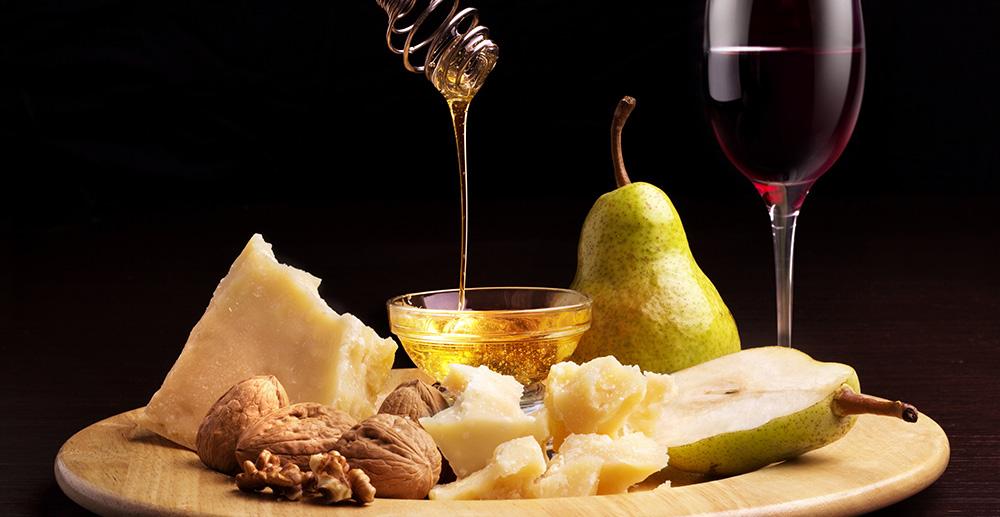
- Chunks with honey and nuts for aperitivo
- Paper-thin slices on carpaccio
- Wedges with aged balsamic (the classic combo!)
- Paired with wine (try Barolo or Chianti Classico)
Cooked Applications:
- Risotto finishing: Stir in at the end for creaminess
- Pasta water trick: Add rinds while cooking for extra flavor
- Soups and stews: Those rinds are liquid gold!
- Gratins and bakes: Melts beautifully without getting stringy
- Pizza topping: But only on white pizzas, please!
The Ultimate Grana Test 🧪
Real quality Grana should:
- Melt on your tongue while leaving crystalline crunch
- Smell rich and nutty (not ammonia-like)
- Have visible marbling and natural color variation
- Leave you wanting more (that’s the umami talking!)
Remember: Grana isn’t just cheese – it’s edible history, regional pride, and pure Italian passion aged to perfection. Once you taste the real deal, there’s no going back to the shaker bottle!
What’s your favorite way to enjoy Grana? Team Parmigiano or Team Grana Padano?